Solar Roof Ventilation: Costs, Benefits & Installation Guide (Solar Roof Vent vs Whirly Bird)
Real airflow performance, installation costs, and an honest comparison to whirly birds so you can choose the right roof ventilation for your home.
Solar roof ventilation explained
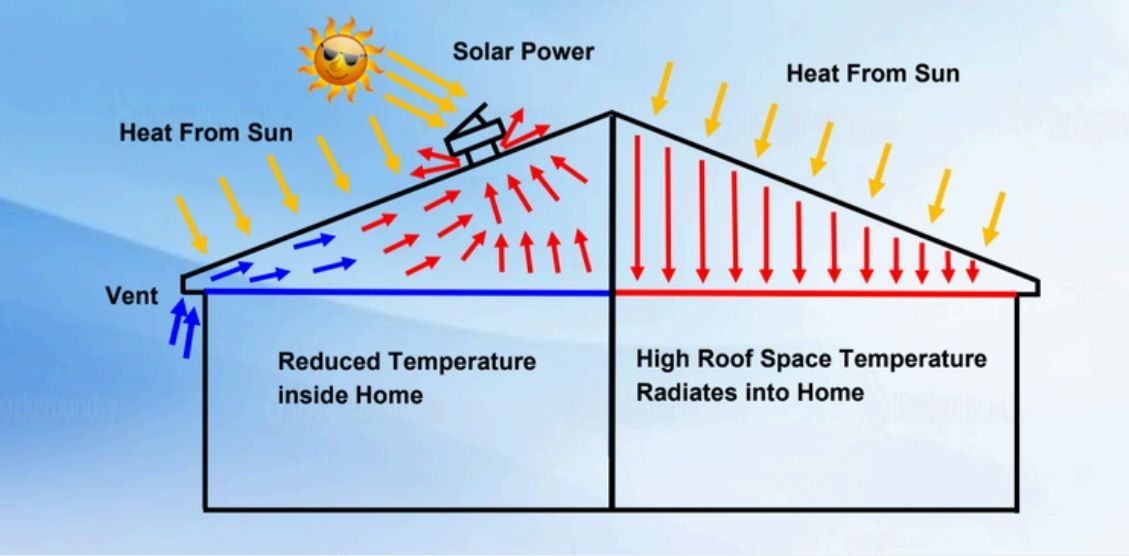
A solar roof vent is an active ventilation system that uses a roof-mounted solar panel to power an internal fan. The fan mechanically extracts hot air from the roof cavity, reducing heat build-up and improving airflow through the ceiling space.
Because the system actively moves air, performance is consistent and predictable, unlike passive ventilation systems that rely entirely on weather conditions.
A whirly bird, by comparison, is a passive wind-driven roof ventilator. It relies on wind pressure and temperature differences to spin and draw air from the roof cavity. On windy days airflow can be reasonable, but on still or humid days performance can drop to almost zero.
Airflow performance comparison
Solar roof vents move significantly more air than whirly birds, particularly in low-wind conditions.
Typical air movement figures (cubic metres per hour):
- Whirly bird in still air: 0–100 m³/hr
- Whirly bird in light wind: 150–300 m³/hr
- Whirly bird in strong wind: 300–500 m³/hr
- Solar roof vent in full sun: 900–1,500 m³/hr
- Solar roof vent on cloudy days: 300–800 m³/hr
- Solar roof vent with wired backup: 900–1,200 m³/hr (day and night)
In real-world use, one solar roof vent performs roughly the same as four to six whirly birds over a full day.
What happens when the sun isn’t shining
Modern solar roof vents are designed to operate in diffuse light, not just direct sunlight. On overcast days airflow is reduced but does not stop, typically running at around 30–60% of peak output. Even at this reduced level, performance is usually equal to or better than a whirly bird on a calm day.
Some models also offer a wired backup option, which allows the fan to switch automatically to mains power when solar input drops. This enables ventilation to continue at night or during extended periods of cloud, providing consistent airflow when roof cavities tend to hold heat.
Temperature Cut-Off Explained
Many solar roof vents are designed to activate only once the roof cavity reaches around 24°C. Below this temperature, excess heat is minimal, so active ventilation provides little benefit.
Once the roof space warms past this point, the fan automatically turns on to remove trapped heat. As temperatures drop again, the system slows or switches off, ensuring ventilation only operates when it actually improves comfort and efficiency.
Optional features that improve performance
Certain models are available with optional controls that increase comfort and efficiency. Wired backup allows continuous ventilation regardless of sunlight, while remote control options let homeowners manually adjust fan speed, turn the system on or off, or manage airflow seasonally.
These features turn solar roof ventilation into a controlled mechanical system rather than a passive upgrade.
Installation costs and pricing
The cost to supply and install a solar roof vent varies depending on roof type, height, pitch, and access.
Typical installed pricing for solar roof vents:
- Metal roof, single storey: $700–$850
- Tile roof: $800–$1,000
- Steep pitch or double storey: $1,000–$1,300
Whirly bird installation costs are lower:
- Metal roof: $450--$550
- Tile roof: $550–$650
Solar vents generally take longer to install due to precision cutting, sealing, and fan integration, which is reflected in the price.
Choosing the right ventilation option
Homes that suffer from excessive roof heat, rely heavily on air-conditioning, or have rooms directly under the roof benefit most from solar roof ventilation. Performance is predictable and independent of wind, making it particularly effective for metal roofs and low-wind areas.
Whirly birds can still be a suitable option where budget is the main concern or where consistent wind conditions exist, but they offer limited control and variable performance.
Final thoughts
Whirly birds provide basic ventilation at a lower upfront cost, but solar roof vents deliver significantly higher airflow, consistent operation, and measurable heat reduction.
For homeowners looking for reliable, long-term cooling performance rather than a simple passive solution, solar roof ventilation represents a clear step up.